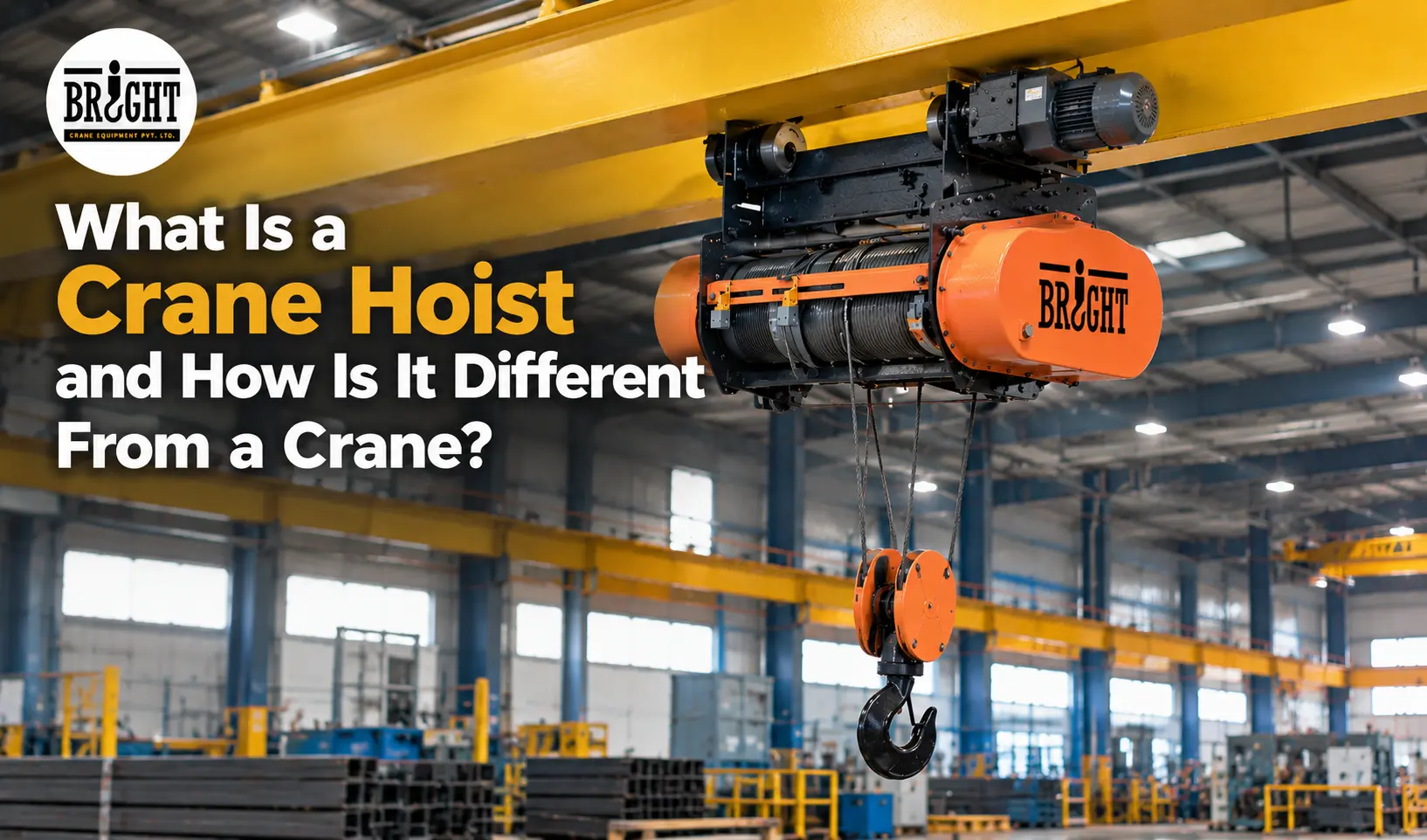
A crane hoist is the lifting mechanism of a crane. It raises, lowers and holds a load using a motor, gearbox, rope drum or chain wheel, wire rope or load chain, hook and a fail-safe brake. The hoist handles only the vertical lift; the crane structure (trolley, bridge girder and runway) moves the hoist horizontally. Wire rope hoists suit heavier loads and higher lifts, while electric chain hoists suit lighter, compact applications.
Read →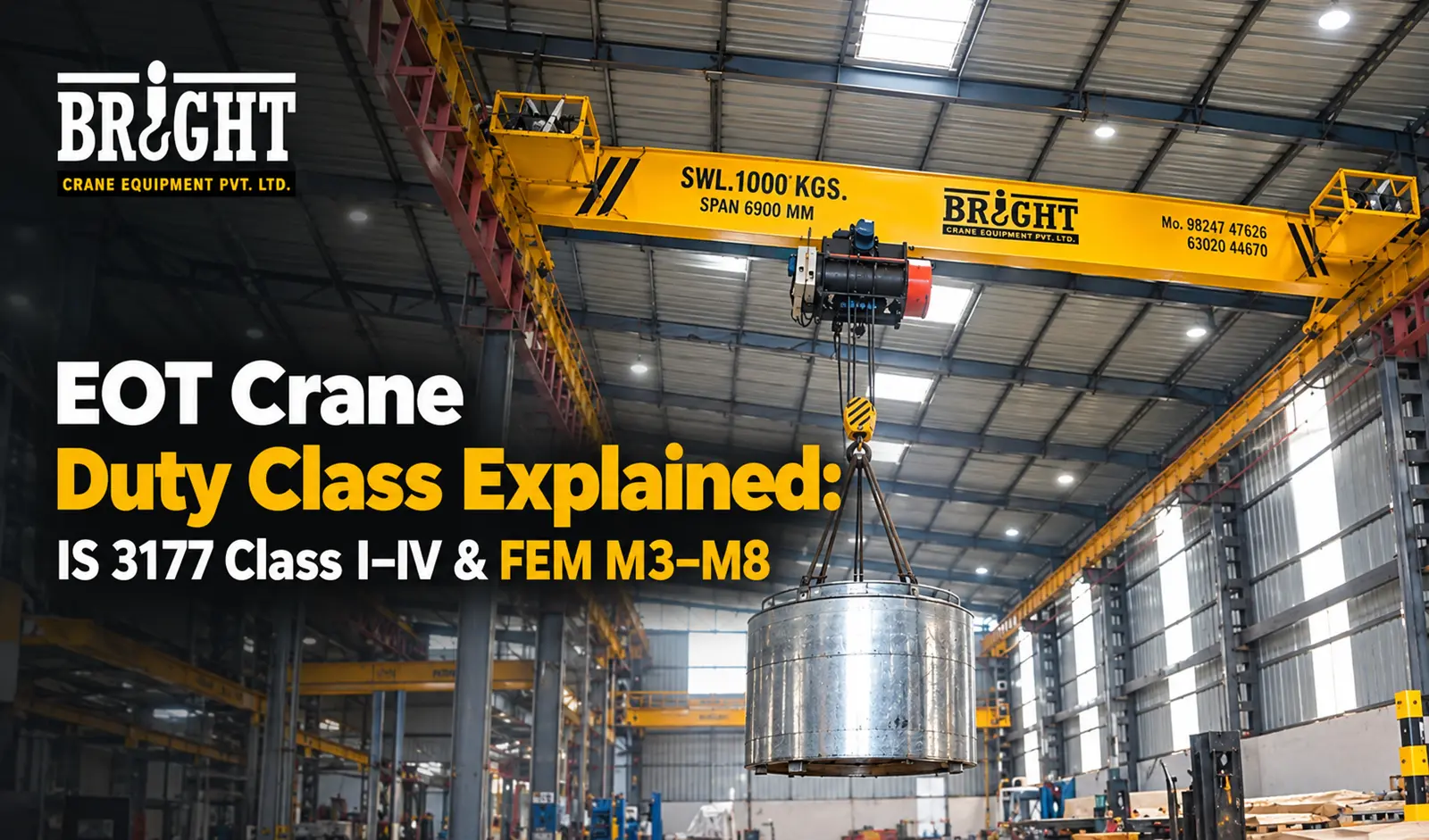
Duty class is the single most consequential specification on an EOT crane enquiry - and the one most often copied from a previous purchase order without being checked.
Read →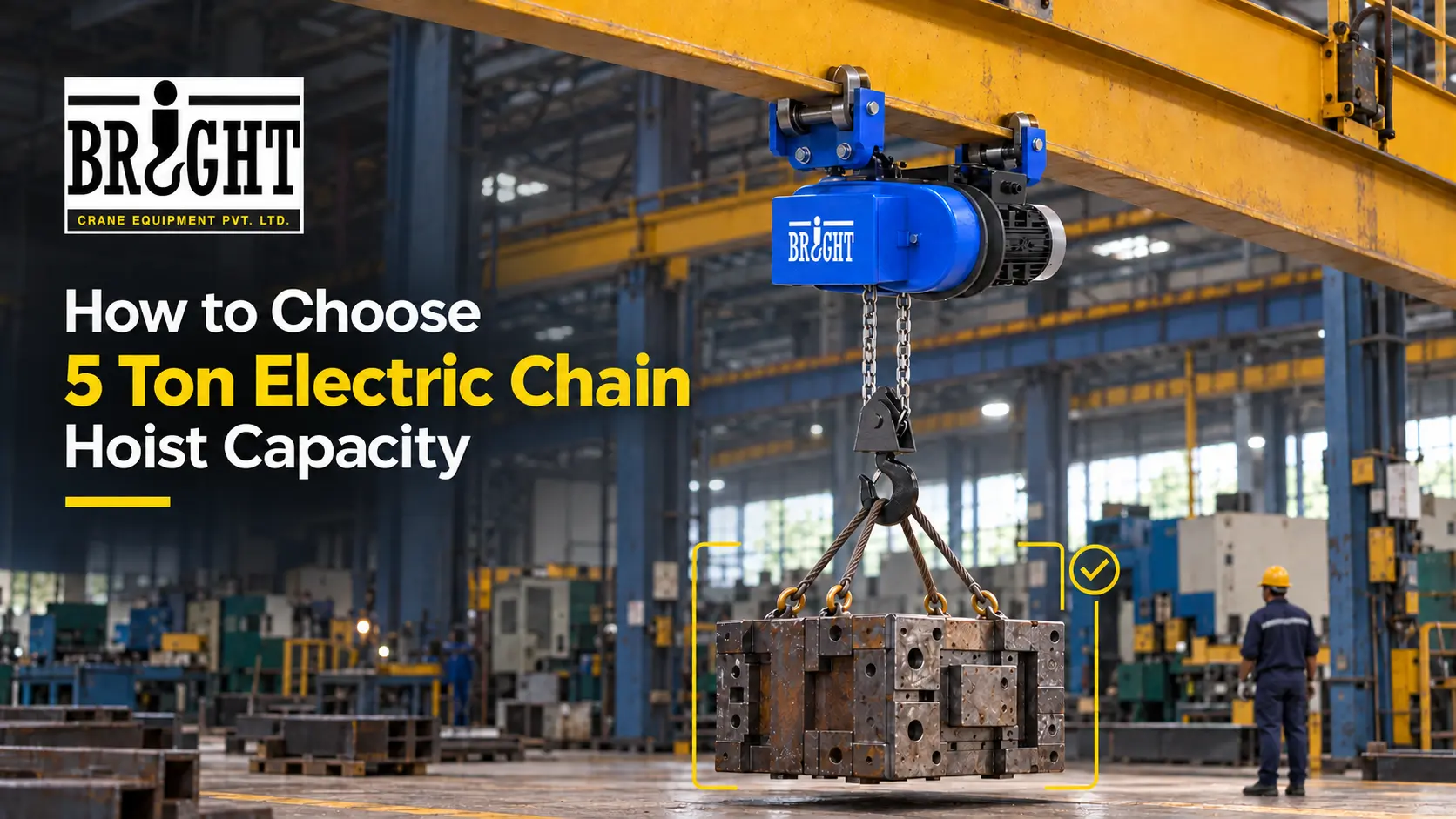
Most buyers decide their hoist in under a minute. The heaviest load in the shop is around four and a half tonnes, so a 5 ton hoist must be the answer. Six months later the motor is tripping, the brake is slipping and the load chain has started to elongate.
Read →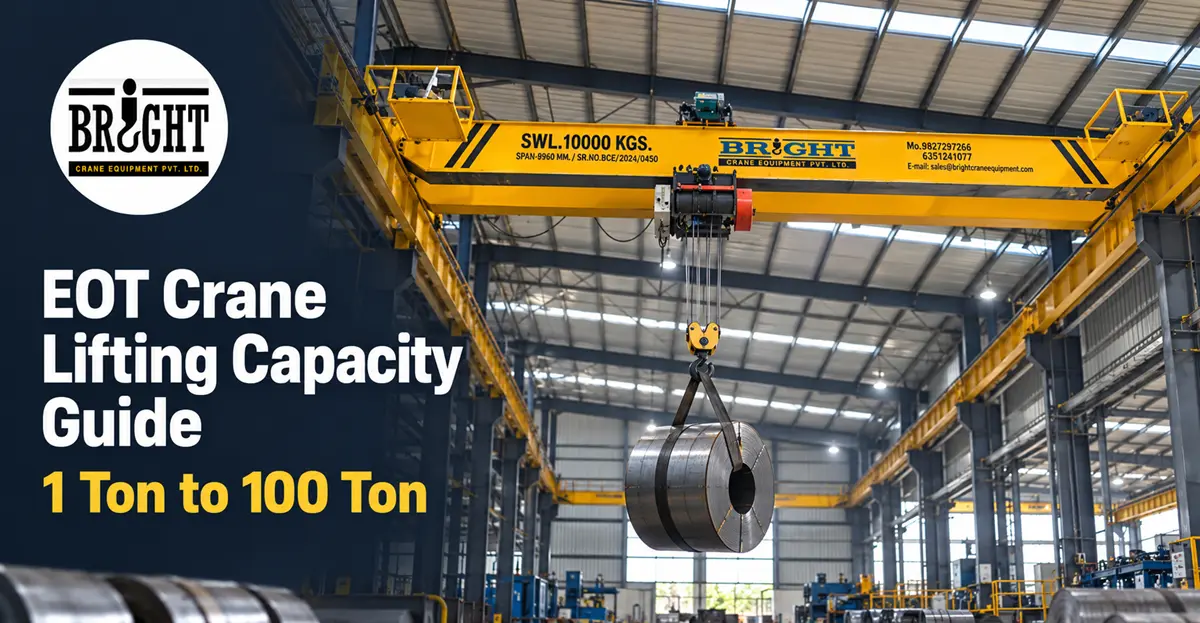
EOT crane lifting capacity is the maximum load a crane can safely lift at the hook, rated in tonnes and available across the full span. To select it, add your heaviest single load to the weight of all below-the-hook attachments, apply a 10–25% safety margin, and round up to the next standard rating - 1, 2, 3, 5, 7.5, 10, 12.5, 15, 20, 25, 30, 40, 50, 63, 80 or 100 tonnes. Single girder cranes suit roughly 1-12.5 tonnes; double girder is standard from 20 tonnes up to 100 tonnes and beyond.
Read →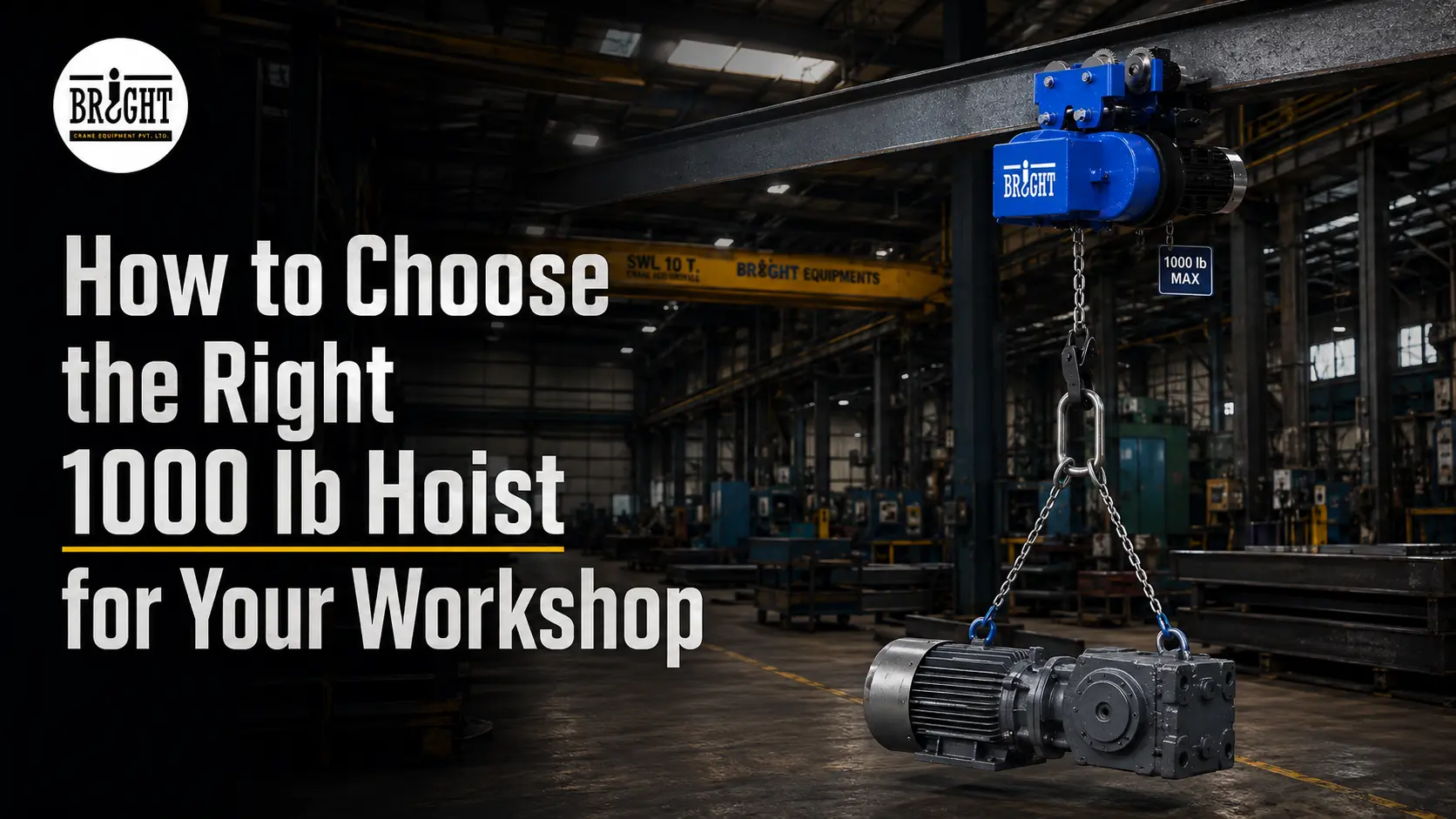
To choose the right 1000 lb hoist for your workshop, first confirm your heaviest load (including rigging) stays safely within 1000 lb after a 25% safety margin.
Read →
Double girder EOT crane price in India depends on capacity, span, lifting height and duty class — there is no single number. This guide covers capacity selection from 5T to 50T+, indicative price ranges and the checklist to run before you sign a purchase order.
Read →